Mondolkiri Province is a large and sparsely populated rural Province that borders Vietnam. It’s home to the Bunong people – the indigenous people who have lived here for many years. Some of the Bunong people practice their traditional semi nomadic lifestyle living off the forest through hunting, collecting fruits and plants.
However, more and more Bunongs have chosen a different
lifestyle. They have settled and
established small communes with smallholdings producing rice, vegetables and
life stock.
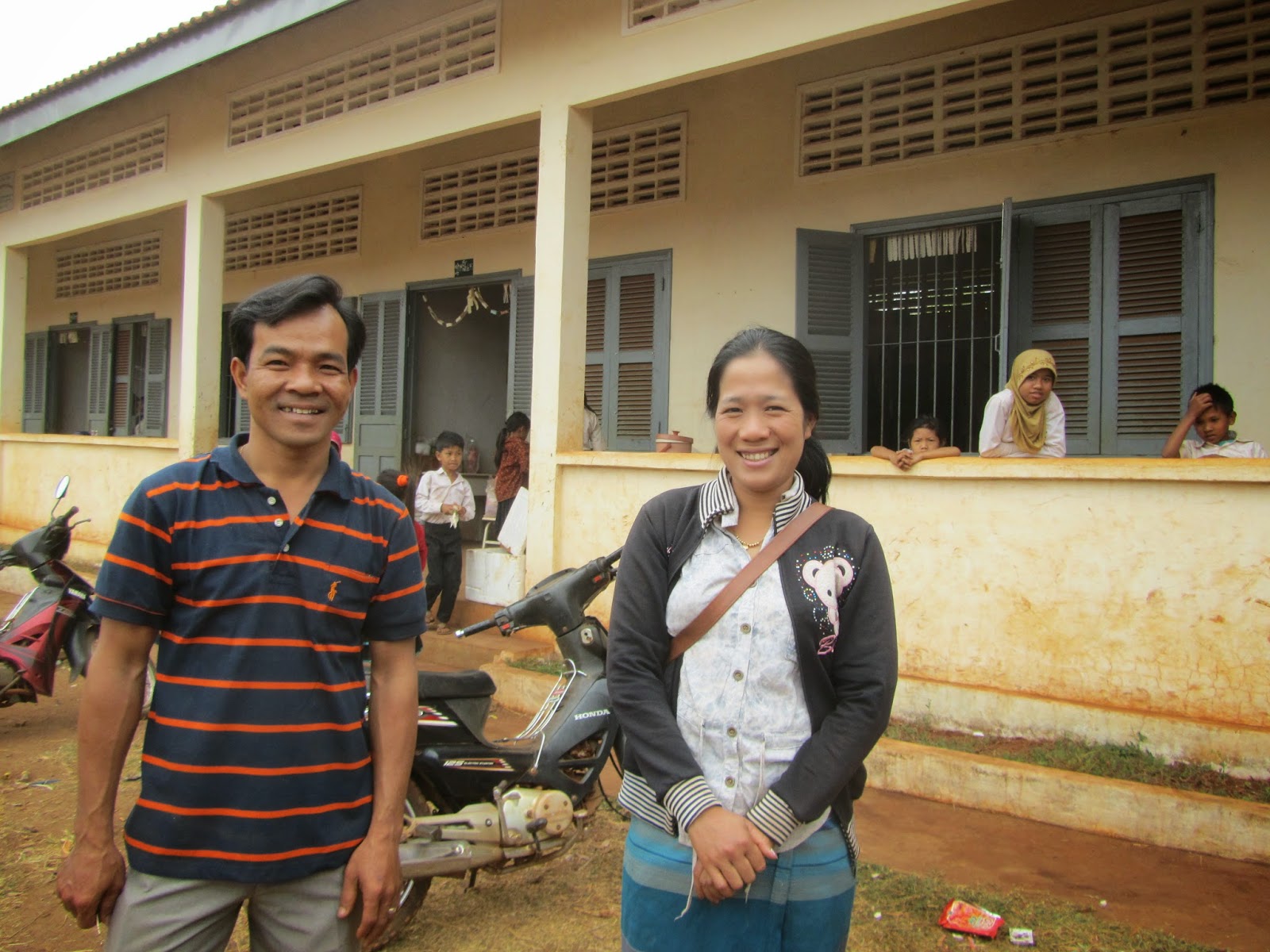
Usually, these communes have a number of small schools consisting of 2 to 6 classrooms and 50 to 200 students in each village. (Buchiri Commune for instance has 5 villages with 5 different schools). Students are taught from grades 1 to 6. However, Student attendance drops off greatly at the later grade levels because children are required to either help collect produce from the forest or grow produce on the farm. Teachers in these schools are typically Bunong and have a grade 9 Education.
Usually, these communes have a number of small schools consisting of 2 to 6 classrooms and 50 to 200 students in each village. (Buchiri Commune for instance has 5 villages with 5 different schools). Students are taught from grades 1 to 6. However, Student attendance drops off greatly at the later grade levels because children are required to either help collect produce from the forest or grow produce on the farm. Teachers in these schools are typically Bunong and have a grade 9 Education.
Teachers in these remote schools have been dependent on
receiving their salary from the DOE via the POE. Now very recently the government has decided
that teachers will be paid their salary directly into their own personal bank
account. In early February 2014 ACLEDA
bank staff were busy in the schools opening bank accounts for the teachers.
Throughout Mondolkiri Province, teachers will now be able to
travel to Sen Monorom or to ACLEDA ‘apartment’ banks to withdraw their money.
February 19, 2014, Teachers were interviewed and were asked
how they felt about having their own bank account. See below answers from teachers:
 “Yes I’m excited to have a new bank
account. I can get my salary anytime I want. It is much easier to get my salary from the
bank”. Krob Khna
“Yes I’m excited to have a new bank
account. I can get my salary anytime I want. It is much easier to get my salary from the
bank”. Krob Khna
 “Yes, I’m happy to
have a bank account”.
“Yes, I’m happy to
have a bank account”.


 “When I get my salary
at the DOE in Boursra, there is a list of names and salaries posted on the
wall. Now, the government will put our money directly in our bank account.
“When I get my salary
at the DOE in Boursra, there is a list of names and salaries posted on the
wall. Now, the government will put our money directly in our bank account.

What are the benefits to you of having a bank account?
“When
my money is in the bank it will grow”.

 “When I keep my money
in the bank it has ‘security’ and I can also get interest. I heard it from my sister. My
sister has a bank account" Neyso Kon
“When I keep my money
in the bank it has ‘security’ and I can also get interest. I heard it from my sister. My
sister has a bank account" Neyso Kon

“ When I go to my homeland ‘Tae Kaev Province’ I can withdraw my money from there also”.

“There is benefit for me. I spend less money to travel to Sen Monorom. Sometimes we have to call the DOE in Boursra to ask ‘where are you?’ ‘Sometimes they work and sometimes they don’t work’.

Teachers' bank account will be opened “April 1st , 2014”. Salaries will be deposited monthly.
 “I think that it’s
good for the teachers to have a bank account because they can spend less time,
and less money to get their salary.
Teachers can be more independent and if they want to save money and earn
interest then they can”. Let Savy
“I think that it’s
good for the teachers to have a bank account because they can spend less time,
and less money to get their salary.
Teachers can be more independent and if they want to save money and earn
interest then they can”. Let Savy
Are you excited that you now have a bank account?
“Yes, I’m happy to
have a bank account”.
“In fact, I’m very
excited because the State –the government has made it mandatory for all
teachers to open a bank account to secure their money” .
Sadin Sreymao
Is having a bank account important for you? Why?
Is having a bank account important for you? Why?
“Yes, because when I
go to the DOE in Bousra to collect my
money, I’m never sure if I’m going to receive it. The
DOE doesn’t always have my salary. I
have to wait many months for the DOE in Bousra to pay me because the DOE didn’t
collect my salary from the POE in Sen
Monorom”.
“This is a very long
process and during the monsoon season we are not able to reach Bousra because
the roads are not good to travel”.
“Now I can go directly
to Sen Monorom and collect my money from the bank”.
“This
is how the system works:
-
The POE goes
to the Provincial Bank in Sen Monorom to take the money out.
The POE
contacts the DOE in Bousra to let him know that the teachers’ salary is at his
office.
The DOE goes to the POE in Sen Monorom to collect the teachers’ salary.
The DOE goes to the POE in Sen Monorom to collect the teachers’ salary.
The DOE
contacts each school directors to inform the teachers that the money is waiting
for them in Bousra.” Kroye
Chet
Does it make you feel respected by your family, friends, community now that you have a bank account?
Does it make you feel respected by your family, friends, community now that you have a bank account?
“Yes! My family, my parents and my community are so
proud that I now have a new ACLEDA account.
It gives me a sense of pride”.
Sarun Seyen
“Yes, I feel respected
more than before because my family told me that the DOE will not ‘cut’ my money
anymore. My family is very happy for me
that I will have a bank account. They
will not worry about me anymore. They
will know that my salary is in the bank and will not be ‘cut’ [and will be secured] by the bank”. Neyso Kon
“Yes. My friends, my family, my community ask me ‘where are you
going?’ I tell them, ‘I’m going to ACLEDA bank to get money’. People respect me because of this”.
Yun Sokhun
Do you expect to receive a full salary? How will you know?
“When I get my salary
at the DOE in Boursra, there is a list of names and salaries posted on the
wall. Now, the government will put our money directly in our bank account.
There will be ‘NO’ middle
man”.
Tun Oeung and Khay Tola
Tun Oeung and Khay Tola
“Yes. I listen to the radio. The government announced that all teachers
throughout Cambodia will receive a ‘full’ salary. No one can ‘cut’ their salary”.
Sarun Seyen
What are the benefits to you of having a bank account?
“I know about interest because I read the
ACLEDA document the bank people gave me.
I read the bank document ‘very
carefully’ and I found out that my money can grow”.
“When I keep my money
in the bank it has ‘security’ and I can also get interest. I heard it from my sister. My
sister has a bank account" Neyso Kon “ When I go to my homeland ‘Tae Kaev Province’ I can withdraw my money from there also”.
Yun Sokhun
“There is benefit for me. I spend less money to travel to Sen Monorom. Sometimes we have to call the DOE in Boursra to ask ‘where are you?’ ‘Sometimes they work and sometimes they don’t work’.
With the bank, I know
I can count on my money to be there. I
don’t have to wait for anyone to give me my salary”.
“My salary is more
safe and secure. I will spend less
money, less time for travel”. Yoy Bora and Roeun Len
Where will you withdraw your money from?
“Sen Monorom”. “It will be much
easier than travelling to Boursra. The
road condition to Bousra is treacherous. It’s rutted and dusty in the dry
season and slippery during the monsoon season”.
Khay Tola
Teachers' bank account will be opened “April 1st , 2014”. Salaries will be deposited monthly.
Savy my VA was
responsible in translating the interview with the teachers.
* February
19, 2014 Interview Questions/Answers re: Opening a Bank Account
*POE = Provincial Office of Education *DOE = District Office of Education *Photos were taken with the teachers/directors permission to up load on any website or to be printed in newspapers or news letters.
*POE = Provincial Office of Education *DOE = District Office of Education *Photos were taken with the teachers/directors permission to up load on any website or to be printed in newspapers or news letters.
More later ...


